The Missing Dimension: How 3D Worlds Will Transform AI Creative Tools by 2027

AI creative tools have evolved in waves. Text generation dominated first, with GPT models reshaping how we approach writing. Visual AI followed, as DALL-E, Midjourney, and Stable Diffusion revolutionized image creation. Video generation came next through Runway, Pika, and eventually Sora, transforming motion graphics workflows. Audio synthesis completed the picture with ElevenLabs and similar voice tools.
Yet something critical remains missing. While these platforms excel at producing 2D content, creative professionals increasingly need spatial, immersive outputs. Clients now expect VR walkthroughs, multi-perspective captures, and 3D environment mockups as standard project deliverables.
The absent element? 3D world generation that creative professionals can actually implement without technical expertise.
https://www.youtube.com/watch?v=cCaKjSLPVdU
The Spatial Void in Creative AI
Visit any modern creative studio and witness the subscription chaos: separate platforms for images, videos, and 3D modeling. Despite massive investment in creative AI, nearly every major tool produces fundamentally 2D outputs.
My analysis of the current landscape reveals who's attempting to solve this challenge:
Krea delivers impressive Stage functionality for 3D scene construction, though it emphasizes traditional mesh-based workflows over explorable environment generation.
Flora provides sophisticated inpainting and creative canvas capabilities, without any 3D world features.
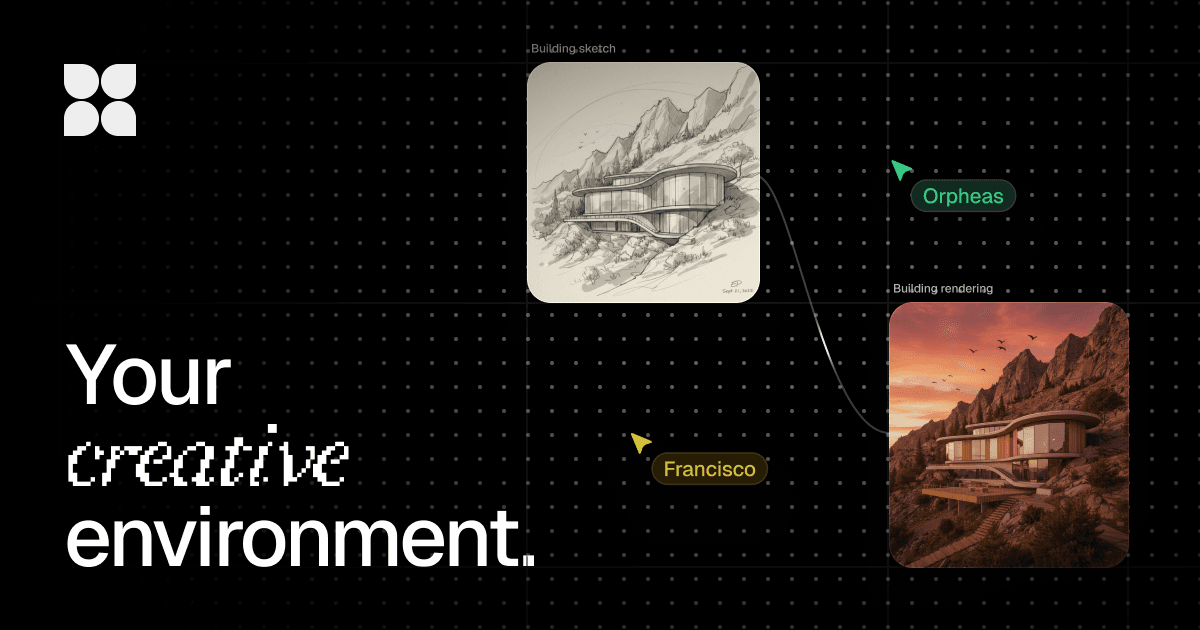
Fuser advertises "200+ models" and mentions 3D generation, yet their emphasis stays on traditional workflow automation rather than immersive environment creation.
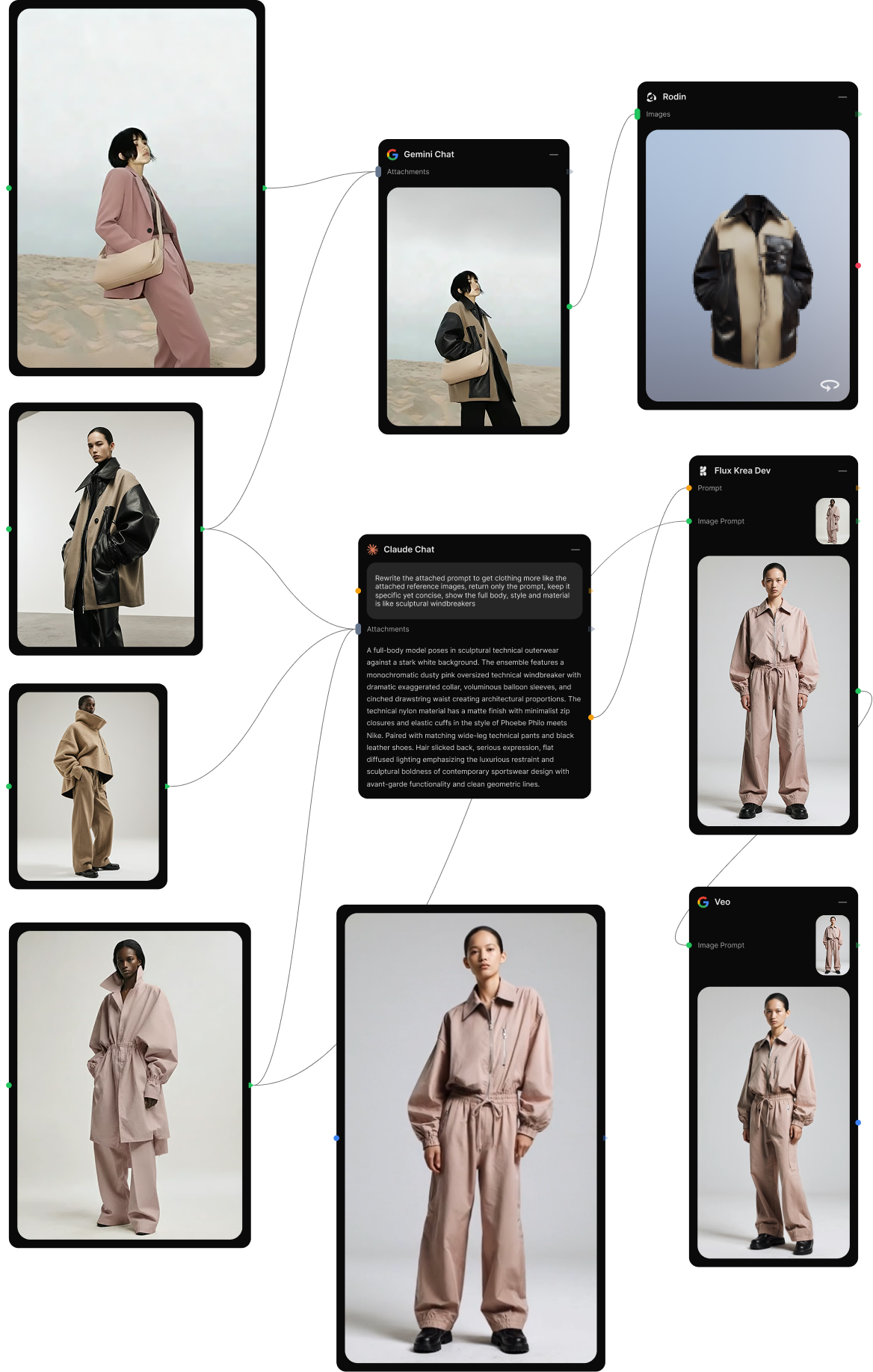
Freepik Spaces delivers a node-based canvas featuring extensive AI models, but their 3D functionality stops at object generation.
The closest spatial solution in the developer ecosystem is ComfyUI's 3D-Pack, enabling sophisticated 3D processing including Gaussian splatting. However, it demands Python environments, CUDA configuration, and conda management. It's exceptional for researchers but impractical for most creative professionals.
Why 3D Worlds Are Unavoidable
Three converging forces make 3D world integration inevitable by 2027:
1. Spatial Computing Surge
IDC forecasts XR hardware shipments reaching 40+ million units by 2026, powered by Apple Vision Pro and competing platforms. Google searches for "immersive art experiences" have surged 2,983% year-over-year. Creative teams no longer think in purely flat terms.
2. Evolving Client Expectations
Modern clients don't settle for a single hero image. They demand that image transformed into a 3D environment for exploration, multi-angle capture, and potential VR experiences. Traditional creative workflows cannot deliver this without significant technical overhead.
3. Gaussian Splatting Standardization
2025 witnessed Gaussian splatting technology standardization. The Foundry integrated native support in Nuke 17.0. Zillow deployed it in production for real estate experiences. As one industry expert observed: "2026 represents the inflection point where this becomes standard tooling."
Gaussian Splatting Explained (Creative Professional Version)
Consider Gaussian splatting as the distinction between a photograph and a hologram. Traditional 3D relies on triangular meshes (thousands of tiny flat surfaces), which demands significant computation and often appears artificial. Gaussian splatting represents scenes through millions of fuzzy, translucent ellipsoids that render in real-time on consumer hardware.
The practical outcome: input any 2D image, process it through Gaussian splatting, receive an explorable 3D environment you can navigate and capture from any perspective.
Testing the Current Landscape
My hands-on evaluation of these platforms for 3D world capabilities revealed:
- Krea's Stage: Outstanding for 3D scene composition, but utilizes traditional meshes rather than explorable environments
- Flora: Robust creative canvas, zero 3D world functionality
- Fuser: Markets 3D capabilities, but workflow remains 2D-centered
- Freepik Spaces: Strong model collection, no environment building
- ComfyUI 3D-Pack: Complete Gaussian splatting support, but requires technical expertise most creatives lack
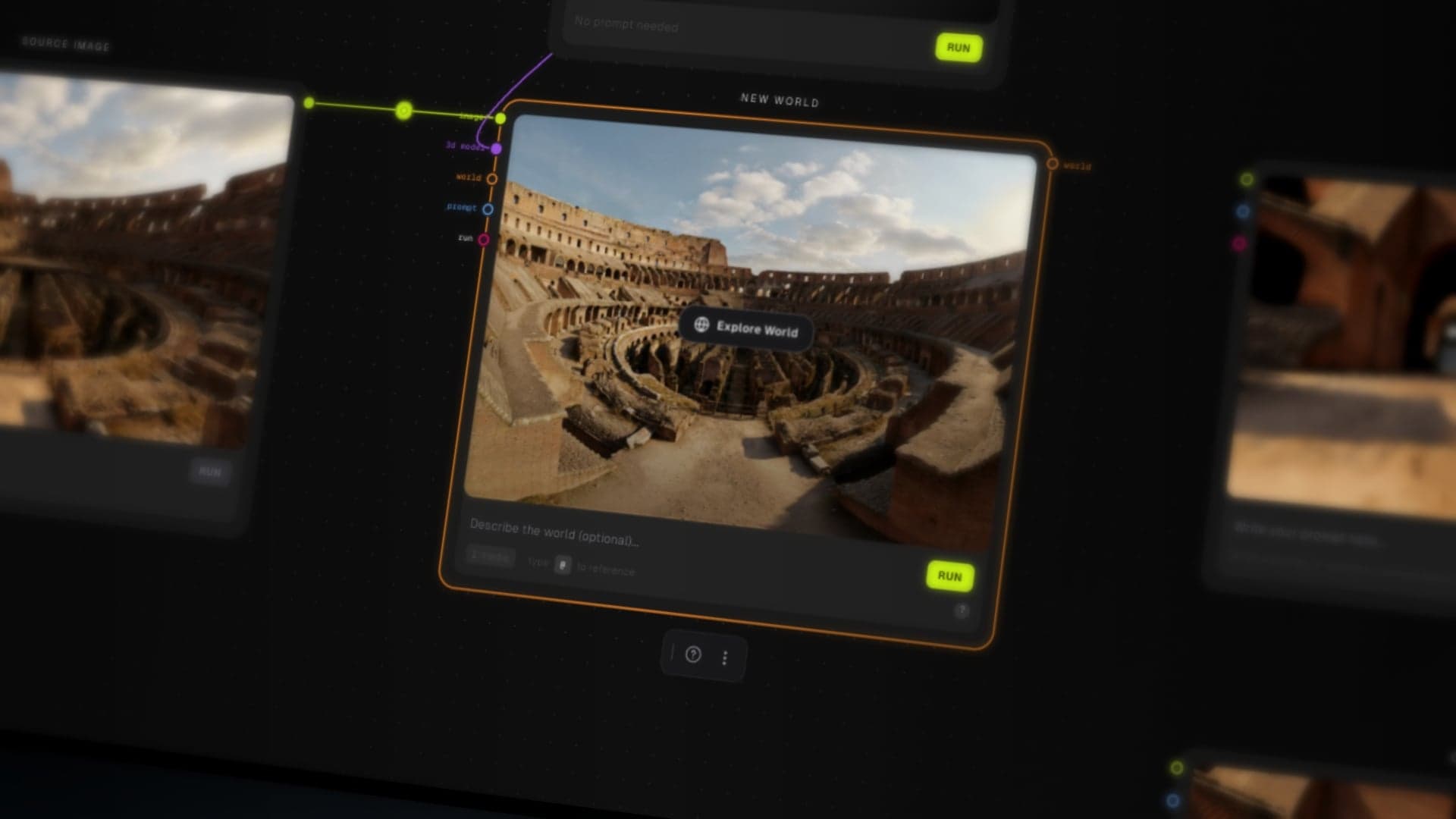
During this research, I discovered Raelume, which integrates Gaussian splatting as a native component in their node-based canvas.

Their Worlds functionality converts any 2D image into an explorable 3D Gaussian splatting environment. Users can position cameras freely throughout the space, place 3D objects, and capture 1K, 2K, or 4K images from any angle. It provides the ComfyUI workflow while remaining accessible to creative professionals without Python knowledge.
Practical Applications of 3D Worlds
Through testing this workflow, here's what transforms when any image becomes an explorable world:
Multi-angle documentation: Generate one primary image, then instantly capture it from numerous perspectives without re-prompting AI models.
Spatial composition: Import 3D objects and position them spatially within the environment rather than relying on AI placement in 2D.
VR previsualization: Environments become immediately VR-compatible, enabling clients to experience concepts before full production.
Iterative exploration: Instead of generating dozens of scene variations, create one world and explore it comprehensively.
The 2027 Forecast
Creative software adoption patterns suggest 3D world generation will become essential functionality for AI creative canvases by 2027. The reasoning:
This pattern remains consistent. Technical early adopters validate the workflow. Industry leaders observe and begin development. Within 18-24 months, it becomes expected functionality across major platforms.
We witnessed this with AI image integration (2022-2024), real-time collaboration features (2019-2021), and cloud-based workflows (2017-2019). Gaussian splatting follows an identical trajectory, accelerated by more mature tooling infrastructure.
Companies like Krea, Flora, and Fuser possess the technical capabilities for Gaussian splatting integration. Freepik has the resources. The question isn't whether, but when they prioritize it over competing features.
The Narrowing First-Mover Advantage
This moment highlights how compressed the first-mover advantage window has become. In 2019, real-time collaboration could provide competitive differentiation for months. In 2022, novel AI integrations offered quarters of advantage.
Currently, core AI capabilities become commoditized within weeks. Differentiation doesn't come from GPT or FLUX integration. Everyone has those. It emerges from combining capabilities into workflows that address genuine creative challenges.
3D world generation represents one of the final major workflow gaps in AI creative tools. Teams that deliver it first, execute it effectively, and make it accessible to non-technical users will capture substantial market share before this becomes standard functionality.
The window closes faster than most anticipate. By late 2027, informing clients you cannot deliver immersive 3D previews from their creative concepts will sound as outdated as claiming inability to collaborate in real-time.
The creative industry's spatial future isn't approaching. It has arrived. The remaining question is which tools will make it accessible to the humans who actually create.
Alex Mercer operates as an independent AI tools reviewer, having evaluated over 200 creative AI platforms. He specializes in workflow tools for creative professionals and maintains no affiliation with any mentioned companies.